We use technical cookies and, only if you accept, Google Analytics statistics cookies to understand how the site is used. No advertising profiling. Details in the Cookie Policy.

How we work

First we explain the method, then you decide.

Four steps, those of our ISO 9001 certified process since 2010 for software design and development. For each: what gets developed, who decides and a few examples of what we're building.

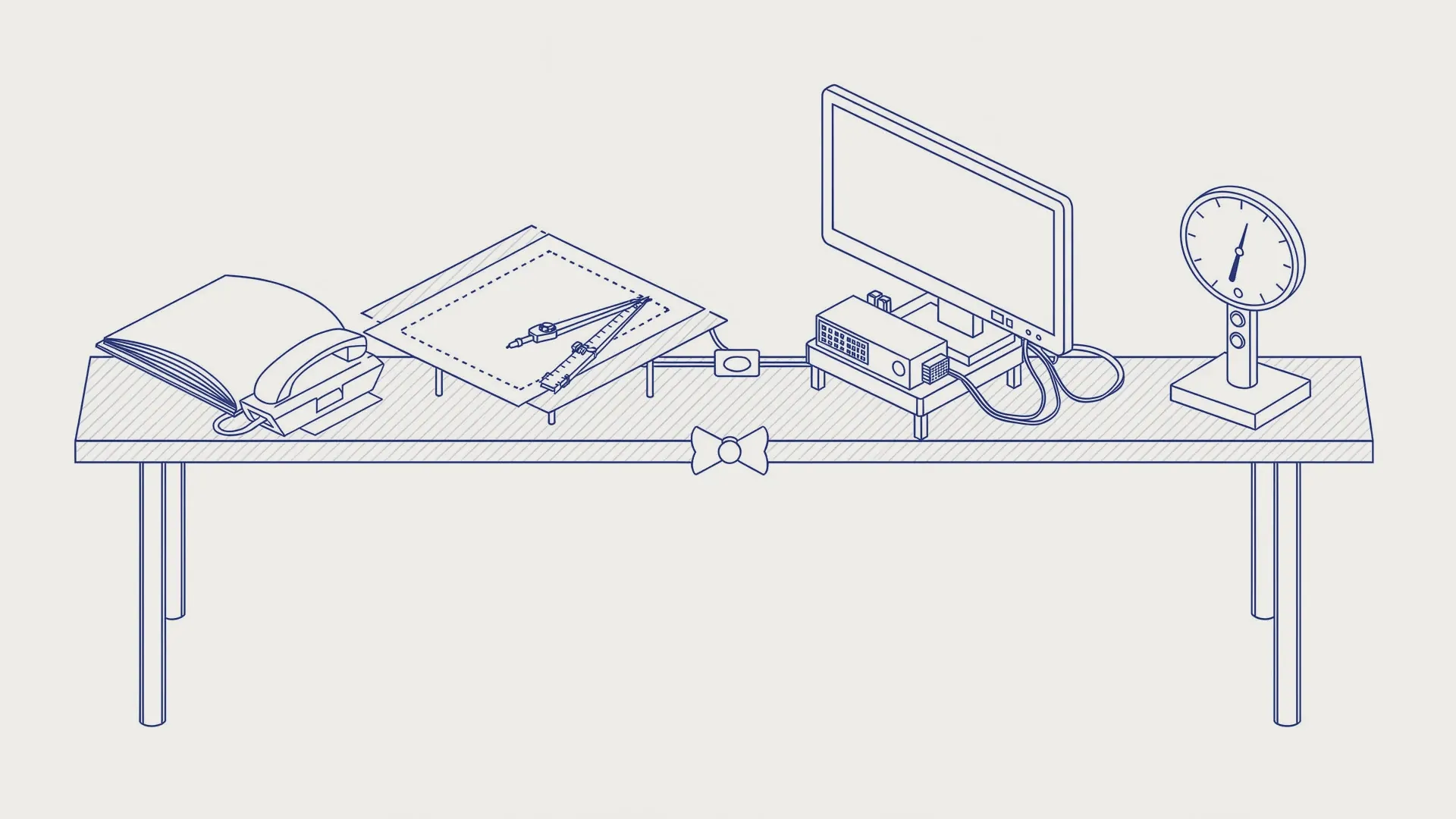
Technical drawing: four stations in a row, a notebook with a phone, a set square and compass on a sheet, a test bench, a gauge with a needle; a valve between the second and third.
  • ISO 9001 since 2010
  • Software design and development
  • Certificate downloadable below

01 · The method

Four steps. Each step sets a goal.

  1. 01. Listening.

    30 minutes to identify the process where you lose the most time, the same process the agent will then optimise. We look together at the systems, the available data and who works on it every day. One question: does an agent really help here?

    What you get

    Within 48 hours, a first analysis with concrete ideas. Even when the answer might be that you don't need an agent.

  2. 02. Scope.

    One process, clear boundaries. We write together how we'll measure the result: hours saved, documents handled without intervention, errors avoided. We also set which data the agent reads, which goes to the language models and which must stay unchanged.

    What you get

    A document with scope and goals. You read and approve it before we develop it.

  3. 03. Build and test.

    We connect the agent to the systems, mail and documents you already use, without changing them. We test it in parallel with the work you do today: your team doesn't bear the agent, every action must be checked by a contact person before it starts.

    What you get

    A prototype tested on your data.

  4. 04. Measure and decide.

    We compare before and after against the goals from step 02 and put them on the table as they are. Data before opinions.

    What you get

    Your decision. Goals missed? We stop, analyse and redesign together. If you continue, we handle the agent's hosting and maintenance.

02 · Who decides

The agent doesn't decide. It proposes.

It's a rule of our working method. Nothing goes out to customers, no irreversible decision without approval. Within the agreed limits, we write down what the agent does and every action it takes requires approval. During the test, if it makes a mistake, the team's manager will be the one to notice.

Human control over every action: the agent prepares, the person approves.

03 · Method and quality

Code verified and tested even with an agent inside.

The rules of our quality system apply to every delivery.
AI included.
  • Testing.

    Every delivery passes the tests before entering your systems.

  • Code review.

    No release without review.

  • Continuous integration.

    Every change is checked automatically: an error shows up straight away, not at the end of the project.

  • Traceability.

    Every technical choice and every change of limits or goals stays in writing. If a new manager takes over, the work stays visible.

You always know what, why and how we work.

ISO 9001:2015

Software design and development · Since 2010

The certificate is public. Read it, before trusting us.

Download the certificate (PDF)

04 · Examples

Where the agent stops and when it's you who steps in.

Examples of what we're building, not delivered projects.

Chasing overdue invoices.

This process in detail

Every Monday someone goes through the due dates and rewrites the same emails, customer by customer. This is the work an agent can do!

Example · in progress

What starts it

Monday morning

From the overdue invoices in your systems.

  1. 01 · Systems

    Extracts overdue invoices

    Grouped by customer.

  2. 02 · Systems

    Sets aside sensitive cases

    Paid, reversed or disputed stay out of the process.

  3. 03 · Documents

    Retrieves the invoices

    And the copies to attach.

  4. 04 · Draft

    Prepares the messages

    One per customer, with number, date and amount. Different tone for the first and third reminder.

  5. 05 · A manager approves

    Accounts decides

    Reviews the list, removes who shouldn't be chased, approves the rest.

  6. 06 · Mail and systems

    Only approved messages go out

    Outcome and next due date go back into the systems.

Criteria

Criteria we agree on together before we start.

  • Share of overdue amounts chased each week
  • Reminders prepared without intervention
  • Minutes spent by the accounts team
  • Wrong reminders stopped before sending

What stays with the person

The list of who gets a reminder and who doesn't. Without approval nothing goes out.

The quote request.

This process in detail

The request arrives, but before writing an email someone has to track down the price list, the discounts applied and the customer's history. The same path will be handed to an agent.

Example · in progress

What starts it

A request arrives

From the website form or by email.

  1. 01 · Mail or form

    Understands what the customer asks

    And what's missing to answer.

  2. 02 · Systems

    Retrieves price list and history

    Prices, discounts already applied, that customer's orders.

  3. 03 · Documents

    Fills in the offer

    On the company template.

  4. 04 · The salesperson

    A manager decides price and terms

    Edits what's needed, then approves.

  5. 05 · Mail and systems

    The approved offer goes out

    It stays on record, with the follow-up date.

  6. 06 · Reminder

    Reminds about the follow-up

    On the date set in the offer, it alerts the salesperson.

Criteria

Criteria we agree on together before we start.

  • Hours from request to first offer
  • Offers sent every week
  • Requests left unanswered

What stays with the person

Price and terms are decided by the salesperson alone. The agent doesn't negotiate and doesn't call anyone.

The shared inbox.

This process in detail

The inbox holds all the data you need: orders, requests, invoices, complaints. Every morning someone reads and handles it. An agent would do the first read and a manager would confirm.

ScopeHere the agent only routes. It records nothing in the systems and doesn't reply to customers.

Example · in progress

What starts it

An email arrives

In the shared inbox, for example info or accounts.

  1. 01 · Mail

    Reads emails and attachments

    Order, quote, reminder received, complaint, invoice or other.

  2. 02 · Systems

    Recognises the sender

    If they're in the customer records. Read only.

  3. 03 · Draft

    Writes the summary

    Two lines, plus the data missing to answer.

  4. 04 · Management

    Suggests the recipient

    The order to whoever enters it, the quote to sales, the invoice to accounts.

  5. 05 · A manager decides

    Whoever watches the inbox confirms

    Sees the suggestion, corrects it if needed, confirms.

  6. 06 · Mail

    Reaches the right person

    With the summary at the top. Nothing goes out to the customer.

Criteria

Criteria we agree on together before we start.

  • Emails routed straight away
  • Time from arrival to pick-up
  • Emails still unanswered at the end of the week

What stays with the person

The reply to the customer is written by the contact person. Every email the agent can't classify is checked by whoever manages the inbox.

The same rule applies to every example: human control over every action. The agent reads and prepares; nothing becomes effective without a person's feedback.

Let's talk about your process.

30 minutes analysing the process that costs you the most time, with the people who will build the agent for you. Within 48 hours, an analysis with concrete ideas.

Let's talk about your process
Count the hours of a process